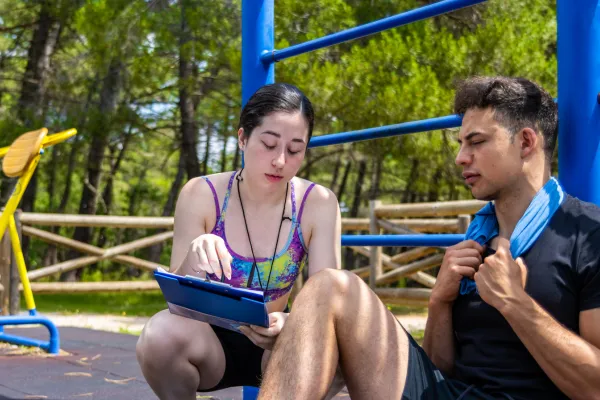
Setting Goals That Actually Work: Planning Your Fitness Journey
You want to "get in shape." You want to "be stronger." You want to "lose weight." These are your goals. So you join a gym, start working out, and... three months later you've quit. You had no clear target, no plan to get there, no way to measure progress, and no idea if you were even moving in the right direction.
Or maybe you set a specific goal—bench press 225 pounds—but gave yourself no timeline, no progression plan, no intermediate milestones. Just "someday I'll bench 225." A year later, you're still benching 185, frustrated and unmotivated because the goal feels as distant as when you started.
Here's what separates people who achieve fitness goals from those who don't: specific, measurable, time-bound goals paired with structured action plans. Vague aspirations without plans are just wishes. Clear goals with systematic approaches are achievements waiting to happen.
You don't need more motivation. You need better goals. Goals that are concrete enough to pursue, realistic enough to believe in, and structured enough to create a roadmap. Goals that break down intimidating transformations into manageable steps you can accomplish this week, this month, this quarter.
Let's break down why vague goals fail, the SMART goal framework applied to fitness, setting appropriate timelines based on reality, creating actionable plans with milestones, tracking progress effectively, and maintaining motivation when the initial excitement fades.
Why Vague Goals Fail
The problem with "I want to get in shape."
No Clear Definition of Success
Vague goals:
"Get in shape"
"Be stronger"
"Lose weight"
"Build muscle"
"Look better"
The problems:
What does "in shape" mean exactly?
How much stronger?
How much weight?
How much muscle where?
What does "better" look like?
Without definition:
No way to measure progress
No way to know if you've achieved it
No way to create a plan
Just wandering aimlessly
No Actionable Steps
Vague goal: "Get stronger"
What do you do today to get stronger?
What exercises?
What weights?
What progression?
Without specificity:
Can't create workout plan
Can't track if plan is working
Can't adjust when stalled
No clear path forward
No Timeline Creates No Urgency
"Someday" goals:
No deadline = no urgency
Always tomorrow
Easy to postpone
Never happens
Without timeline:
Can't work backwards to create plan
Can't set intermediate milestones
No accountability
Perpetual procrastination
The SMART Goal Framework for Fitness
Creating goals that actually work.
S - Specific
Instead of: "Get stronger" Specific: "Squat 315 pounds for 5 reps"
Instead of: "Lose weight" Specific: "Reduce body fat from 20% to 15%"
Instead of: "Build muscle" Specific: "Add 2 inches to arms, measured at bicep peak"
Why specific matters:
Clear target to aim for
Can visualize success
Can create exact plan
Measurable progress
M - Measurable
Must have objective metric:
Weight lifted (pounds, kilograms)
Body measurements (inches, centimeters)
Body composition (percentage)
Performance (time, reps, distance)
Photos (visual comparison)
Good measurable goals:
Deadlift 405 lbs (weight)
Waist 32 inches (measurement)
Run 5K in under 25 minutes (time)
10 strict pull-ups (reps)
Why measurable matters:
Track progress objectively
Know when achieved
See incremental improvements
Adjust if not progressing
A - Achievable
Realistic but challenging:
Consider current level
Research typical progression rates
Set stretch goal, not fantasy
Realistic strength gains:
Beginner (0-1 year): 5-10 lbs monthly on major lifts
Intermediate (1-3 years): 2-5 lbs monthly
Advanced (3+ years): 5-10 lbs yearly
Realistic body composition:
Fat loss: 0.5-1% body fat monthly (sustainable)
Muscle gain: 0.5-1 lb monthly (natural, trained individuals)
Unrealistic goals:
"Gain 20 lbs of muscle in 3 months" (not natural)
"Bench press 405 in 6 months" (from 185 - not happening)
"Get to 8% body fat in 4 weeks" (from 18% - unsafe)
Why achievable matters:
Maintains motivation
Prevents discouragement
Based in reality
Actually accomplish it
R - Relevant
Aligned with your priorities:
Does this goal matter to you?
Does it fit your lifestyle?
Does it support other goals?
Is it YOUR goal or someone else's?
Examples:
If you hate running, don't make marathon goal
If you travel constantly, don't set 6-day/week program
If you love lifting, powerlifting goal makes sense
If aesthetics matter, physique goals over pure strength
Why relevant matters:
Sustains motivation long-term
Fits your life
You actually care about achieving it
Not pursuing someone else's dream
T - Time-Bound
Specific deadline:
12 weeks
6 months
1 year
Specific date
Good time-bound goals:
"Squat 315 for 5 reps by December 31"
"Reduce waist to 32 inches in 16 weeks"
"Complete first pull-up by end of Q2"
Why time-bound matters:
Creates urgency
Allows working backwards
Sets intermediate milestones
Accountability
Setting Realistic Timelines
How long things actually take.
Strength Goals
Beginner to intermediate milestones:
Bodyweight bench press: 3-6 months
1.5x bodyweight squat: 6-12 months
2x bodyweight deadlift: 6-12 months
First pull-up: 4-12 weeks (varies greatly)
Intermediate to advanced:
1.5x bodyweight bench: 1-2 years
2x bodyweight squat: 1-2 years
2.5x bodyweight deadlift: 1-2 years
These are approximations, individual variation exists.
Body Composition Goals
Fat loss (sustainable):
1-2 lbs per week maximum
4-8 lbs per month
10-20 lbs in 3 months
20-40 lbs in 6 months
Going faster = muscle loss, unsustainable.
Muscle gain (natural):
0.5-1 lb per month (trained individuals)
2-4 lbs per quarter
6-12 lbs per year
Slower than most expect, faster than many achieve.
Performance Goals
Endurance improvements:
Couch to 5K: 8-12 weeks
5K to 10K: 8-12 weeks
First half marathon: 12-16 weeks (from 10K base)
Skill acquisition:
First muscle-up: 3-6 months (with pull-up/dip base)
Handstand hold: 4-8 months
Advanced movements: 6-12+ months
Creating Action Plans
From goal to daily actions.
Work Backwards from Goal
Example goal: Squat 315 lbs for 5 reps in 6 months (currently 225 lbs)
Working backwards:
Month 6: 315 lbs
Month 5: 295 lbs
Month 4: 275 lbs
Month 3: 255 lbs
Month 2: 240 lbs
Month 1: 230 lbs
Progression plan: ~15 lbs per month, ~3-4 lbs per week
Now create training plan to achieve this progression.
Set Quarterly Milestones
12-month goal: Reduce body fat from 20% to 12%
Quarterly breakdown:
Q1 (3 months): 20% → 17% (3% loss)
Q2 (3 months): 17% → 15% (2% loss)
Q3 (3 months): 15% → 13% (2% loss)
Q4 (3 months): 13% → 12% (1% loss)
Note: Rate slows as you get leaner (realistic).
Monthly Check-Ins
Each month:
Measure progress (weight, measurements, performance)
Compare to target
On track? Continue
Behind? Adjust intensity
Ahead? Maintain or set new goal
Weekly Actions
What you do this week:
Specific workouts (which days, which exercises)
Nutrition targets (calories, protein)
Hydration goals (daily water intake with Grip Hydra)
Recovery practices (sleep hours)
Weekly execution = monthly milestones = quarterly goals = annual achievement.
Tracking Systems That Work
Measuring progress effectively.
Training Log
Record every session:
Exercises performed
Weight used
Sets and reps completed
How it felt (RPE)
Any notes
Benefits:
See progression over time
Identify when to increase weight
Spot patterns
Objective data
Use app, spreadsheet, or notebook—just track consistently.
Body Metrics
Weekly or bi-weekly:
Body weight (same conditions)
Key measurements (waist, arms, chest, thighs)
Progress photos (same lighting, time, poses)
Monthly:
Body composition testing (if available)
Overall assessment
Compare to targets, adjust approach if needed.
Performance Benchmarks
Test quarterly:
Strength (1RM or 5RM on key lifts)
Endurance (timed run, max reps)
Skill progression (can you do X yet?)
Track improvements against timeline.
Hydration Tracking
Daily:
Water intake (Grip Hydra refills)
Urine color
How you feel
Adequate hydration supports:
Strength performance
Recovery
Body composition
All goals
Track with Grip Hydra—count refills, hit target daily.
Staying Motivated Long-Term
When initial excitement fades.
Focus on Process, Not Just Outcome
Outcome goals: Squat 315 lbs Process goals: Train 4x weekly, progressive overload
Why process matters:
Control the process (not always the outcome)
Daily wins (hit today's workout)
Builds discipline
Outcome follows from process
Celebrate process adherence.
Celebrate Small Wins
Milestone achievements:
First time squatting 225
Waist down one inch
First week of perfect nutrition
Month of consistent training
Don't wait for final goal—celebrate progress.
Adjust Goals as Needed
Not failure to adjust:
Injury changes timeline
Life circumstances shift
Initial goal was unrealistic
Priorities evolve
Flexibility ≠ giving up. Stubbornly pursuing wrong goal = waste.
Build Accountability
Methods:
Training partner (shared goals)
Coach or trainer (external accountability)
Public commitment (social media, friends)
Tracking system (visual progress)
Accountability increases follow-through dramatically.
Remember Your Why
Initial motivation fades:
Excitement wears off
Workouts become routine
Progress slows
Reconnect with purpose:
Why did you start?
What will achieving this enable?
How will you feel when successful?
Who are you doing this for?
Revisit your "why" when motivation dips.
Grip Hydra and Goal Achievement
Hydration as foundational goal.
The Hydration Goal
Specific, measurable, achievable, relevant, time-bound:
"Drink 150 oz water daily for 30 days"
Measured in Grip Hydra refills
Track daily with tally
Builds consistency habit
Why hydration goal matters:
Supports all other goals (strength, fat loss, recovery)
Easy to measure
Builds discipline
Immediate benefits
Muscle arm reminder: Every refill is progress toward hydration goal.
Consistency Through Habit
Daily hydration goal:
Visible tracking (Grip Hydra refills)
Immediate feedback (urine color)
Supports performance
Foundation for other goals
Master hydration consistency = apply to training consistency.
The Bottom Line: Goals Without Plans Are Wishes
Vague aspirations don't create change. Specific, structured goals with actionable plans create results.
Effective goals are:
Specific (exact target)
Measurable (objective metric)
Achievable (realistic timeline)
Relevant (matters to you)
Time-bound (specific deadline)
Effective plans include:
Working backwards from goal
Quarterly milestones
Monthly check-ins
Weekly actions
Daily habits
The process:
Set SMART goal
Create timeline
Break into milestones
Execute weekly actions
Track and adjust
Achieve goal
Stop wishing. Start planning. Make it happen.
Your Goal-Setting Action Plan
This week:
Set one SMART fitness goal (specific, measurable, achievable, relevant, time-bound)
Determine realistic timeline (based on actual progression rates)
Work backwards to create quarterly milestones
Identify weekly actions needed to hit milestones
Create tracking system (log, measurements, photos)
Set hydration goal (daily water intake with Grip Hydra)
Execute this week's plan
Within 12 weeks of systematic approach:
Measurable progress toward goal
Clear roadmap remaining
Consistent execution
Confidence in process
On track for achievement
Plan your work. Work your plan. Achieve your goals.
[Grip Hydra: Daily Hydration Goals Supporting All Your Fitness Goals →]

