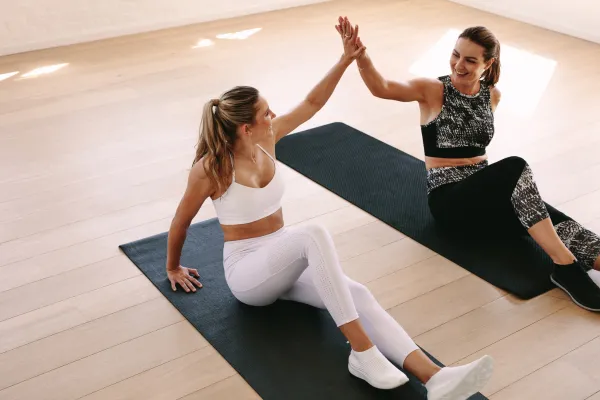
Finding Your Gym Tribe: The Power of Training Partners
You train alone. You show up, put in headphones, do your workout, and leave. You don't talk to anyone. You don't ask for spots. You don't have training partners or gym friends. It's just you and the weights.
Maybe you prefer it this way—no coordination, no waiting, complete control. Or maybe you're just intimidated by the idea of approaching strangers, joining an established group, or committing to training with others. Either way, you're missing out.
Here's what research and decades of anecdotal evidence show: people who train with partners or in supportive communities make faster progress, stay more consistent, push harder, and enjoy training more than those who go it alone.
The difference isn't marginal. It's dramatic. Training partners provide accountability that keeps you showing up when motivation fails. They push you to lift heavier when you'd otherwise play it safe. They spot you on attempts you'd skip alone. They celebrate your PRs and support you through plateaus. They make the hard days easier and the good days better.
You don't need to be best friends. You don't need to train together every session. But having gym people—a tribe, a crew, training partners—fundamentally improves your training experience and results.
Let's break down the specific benefits of training with others, different types of training partnerships, how to find the right people, what makes a good training partner, and how to build gym community even if you're naturally introverted.
The Benefits of Training Partners
Why going it alone limits your progress.
Accountability: The Consistency Multiplier
The problem with solo training:
Only answerable to yourself
Easy to skip when tired
No one notices if you don't show
Motivation fluctuates
With training partners:
Someone expects you
Don't want to let them down
Harder to make excuses
Commitment to others > commitment to self (for most people)
Research shows:
People training with partners are 95% more likely to stick with programs
Attendance rates dramatically higher with social accountability
Consistency matters more than intensity for long-term progress
The math:
Solo: 70% attendance rate
With partner: 90% attendance rate
Over a year: 36 extra workouts = significant difference
Training partner = built-in accountability system.
Performance Enhancement
You lift more with others:
The Köhler effect (research finding):
People work harder when training with others
Especially when training with someone slightly better
Don't want to be the weak link
Push beyond normal limits
Practical manifestations:
Attempt heavier weights (spotter safety)
Complete more reps (encouragement)
Maintain better form (accountability)
Take shorter rest periods (keep pace)
Spotting benefits:
Can push to true failure safely
Attempt weights you'd skip alone
Confidence to go heavier
Safety net enables progression
Training partners literally make you stronger.
Motivation Through Shared Suffering
The psychology:
Misery loves company (in a good way)
Hard workouts feel easier with others
Shared experience creates bonds
Competition drives effort
The competitive element:
Friendly rivalry (healthy)
Matching or beating partner's performance
Pushing each other
Elevates both people's training
The support element:
Tough days happen to everyone
Partners help through rough patches
Celebrating each other's wins
Commiserating over struggles
Training is both competitive and supportive—paradoxically, both work.
Knowledge and Skill Sharing
What you learn from partners:
Form corrections
Programming ideas
Exercise variations
Technique cues
Nutrition strategies
Recovery methods
Different perspectives:
Your partner knows things you don't
You know things they don't
Both improve through exchange
Faster learning curve
Immediate feedback:
Form checks in real-time
Spotting technique issues
Suggesting adjustments
Video analysis together
Training partners accelerate learning.
Types of Training Partnerships
Different approaches for different needs.
The Dedicated Training Partner
What it is:
Same person, same schedule
Train together every session
Coordinated programming
Deep accountability
Pros:
Maximum consistency
Perfect accountability
Coordinated progression
Strong relationship
Cons:
Requires schedule alignment
Dependency (if they're sick/travel, you might skip)
Need compatible goals and intensity
Hard to find perfect match
Best for: People with flexible schedules, similar goals, and compatible training styles.
The Gym Crew
What it is:
Group of 3-5 people
Overlapping schedules
Not always same people each session
Community feel
Pros:
Multiple accountability sources
If one can't make it, others still there
Variety of perspectives
Social and fun
Cons:
Logistics more complex
Varying intensity levels
Can become social hour (distraction)
Some may not take it seriously
Best for: Social people who want gym community without rigid commitment.
The Occasional Partner
What it is:
Train mostly alone
Specific sessions with partner
Heavy days or challenging workouts
Flexible arrangement
Pros:
Autonomy most of time
Support when needed most
Low commitment
Easy to coordinate
Cons:
Less accountability
Inconsistent
Minimal relationship depth
May not show when you need them
Best for: Independent people who want occasional support without daily commitment.
The Online Accountability Partner
What it is:
Never train together physically
Share workouts via text/app
Check in on each other
Virtual accountability
Pros:
No location constraints
Flexible timing
Low pressure
Still provides accountability
Cons:
No spotting or form checks
Less motivating than in-person
Easy to fake or skip
Minimal real connection
Best for: People with unusual schedules or in locations without good training partners.
Finding Your Training Partners
Where and how to connect.
Within Your Current Gym
Look for:
People training same time as you (regulars)
Similar training style (powerlifting, bodybuilding, CrossFit)
Similar strength level (not required but helpful)
Good attitude and work ethic
How to approach:
Start with friendly nod/acknowledgment
Brief comment between sets
Ask for spot on heavy set
Gradually build rapport
Eventually suggest training together
Don't overthink it:
Most people are friendly
Gym people appreciate others who train hard
Worst case: they say no (not a big deal)
Best case: find great training partner
Gym Classes or Group Training
CrossFit, boot camps, group training:
Built-in community
Everyone trains together
Natural friendships form
Easy to find training partners
Advantages:
No need to search
Community is the point
Shared suffering bonds people
Accountability built into structure
Online Communities and Apps
Platforms:
Reddit fitness communities
Local Facebook groups
Training apps with social features
Meetup.com fitness groups
Process:
Post looking for training partner
Specify goals, schedule, location
Meet at gym for trial session
See if it's good fit
Safety note:
Meet in public gym
Tell someone where you're going
Trust your instincts
Perfectly normal to screen carefully
Starting Your Own Group
If can't find existing fit:
Post at gym bulletin board
Create social media group for gym
Organize informal meetups
Build community from scratch
The approach:
"Saturday morning squat sessions, anyone interested?"
Start small (even 2-3 people)
Be consistent
Grows organically
What Makes a Good Training Partner
The essential qualities.
Compatible Goals and Intensity
Must align:
Training for same general goal (strength, size, sport)
Similar intensity (both push hard, or both moderate)
Comparable work ethic
Similar seriousness level
Doesn't need to align:
Exact strength levels
Same exercises (can support each other on different movements)
Identical programming
Same ultimate goals
The dealbreaker:
One person serious, other casual
Creates frustration both ways
Won't last
Reliability and Commitment
Essential traits:
Shows up when scheduled
Communicates if can't make it
Respects your time
Doesn't constantly cancel
Red flags:
Flaky (no-shows without notice)
Always late
Constantly rescheduling
Doesn't value commitment
Your time is valuable. Partner should respect it.
Positive and Supportive
Good training partners:
Encourage during hard sets
Celebrate your PRs genuinely
Support through plateaus
Don't tear down or criticize destructively
Avoid:
Constant negativity
Jealousy of your progress
Competitive in toxic way
Makes you feel worse
Training should be mutually beneficial, not draining.
Honest Feedback
Balance:
Supportive but honest
Will tell you if form is off
Gives real feedback
Doesn't just say everything's perfect
The value:
Form checks that matter
Injury prevention
Actual improvement
Trusted perspective
Compatible Schedule
Practical necessity:
Can actually train together regularly
Similar availability
Realistic long-term
Doesn't require massive life rearrangement
If schedules don't align:
Won't work regardless of other factors
Don't force it
Find someone with matching availability
Building Gym Community
Creating your tribe.
Be a Good Gym Citizen
How to attract training partners:
Be friendly and approachable
Work hard (people respect effort)
Help others when appropriate
Re-rack weights, follow etiquette
Be consistent (become a regular)
People want to train with:
Those who show up consistently
Those who work hard
Those who are friendly
Those who respect the gym
Be that person.
Start Conversations
Low-pressure approaches:
"Nice lift" after someone's PR
"How many sets do you have left?" (basic gym interaction)
"Mind if I work in?" (creates connection)
Comment on shared experience (tough workout, gym being crowded)
Gradually builds rapport:
Brief friendly exchanges
Over weeks, become familiar
Natural progression to training together
Doesn't require forced friendship
Offer Value
Be helpful:
Offer spot when someone struggling
Share equipment knowledge
Give form feedback if appropriate (and welcome)
Be generous with your time
Create positive relationships:
People remember who helped them
Builds goodwill
Natural foundation for partnership
Respect Boundaries
Not everyone wants training partners:
Some people truly prefer solo training
Headphones in = don't disturb
Respect preferences
Don't take rejection personally
The right people will be receptive.
Hydration and Training Partners
The shared discipline.
Group Accountability for Hydration
Training partners:
Remind each other to drink
Share hydration strategies
Bring Grip Hydra bottles
Make it part of routine
Muscle arm visibility:
Reminder for whole group
Shared commitment to basics
Hydration becomes team value
Rest Period Hydration Ritual
Between sets:
Both sip water
Brief conversation
Mental reset
Physical recovery
The pattern:
Set → rest/hydrate → set
Natural rhythm
Social and functional
Better recovery through hydration
The Bottom Line: You're Stronger Together
Training alone has benefits—flexibility, autonomy, no coordination needed. But the drawbacks are significant: less accountability, reduced intensity, slower progress, and missing the social element that makes training sustainable long-term.
Training partners provide:
Accountability (show up consistently)
Performance boost (lift heavier, work harder)
Safety (spotting, form checks)
Knowledge (learn from each other)
Enjoyment (shared experience)
Sustainability (makes training fun)
The result:
Faster progress
Better adherence
Reduced injury
More enjoyment
Long-term consistency
You don't need a best friend. You need someone who shows up, works hard, and pushes you to be better.
Your Gym Tribe Action Plan
Starting this week:
Identify potential partners (regulars training same time)
Start small interactions (friendly nod, brief comment)
Offer to spot someone (natural connection point)
Ask for spot on heavy set (opens conversation)
Suggest training together once rapport established
Bring Grip Hydra (shared commitment to basics)
Be the partner you want to have (reliable, supportive, hard-working)
Within 4-8 weeks of finding training partners:
Better attendance (accountability)
Heavier lifts (spotting and motivation)
More enjoyment (social element)
Faster progress (consistency + intensity)
Built-in gym community
Stop training alone. Find your tribe. Get stronger together.

