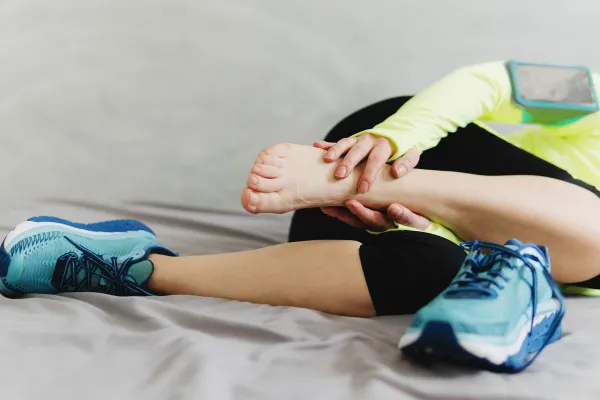
Training Through Injuries: When to Push, When to Stop
Your shoulder hurts. It's been bothering you for two weeks. But you don't want to miss workouts. You don't want to lose progress. So you keep benching through the pain, telling yourself it'll work itself out. The pain gets worse. Now you can't lift your arm overhead without sharp pain.
Or maybe you're on the opposite end—you felt a twinge in your lower back. You immediately stop all training. You sit on the couch for three weeks. The pain barely improves. Your strength and conditioning decline. When you finally return to training, you're weaker and the back issue is still there.
Here's the truth most people miss: smart training through minor injuries accelerates recovery while maintaining fitness. Complete rest often makes things worse. But pushing through actual injury causes catastrophic damage. The key is knowing the difference and adjusting intelligently.
You can almost always train productively even when injured. You just can't train the same way. Smart modifications allow continued progress while protecting injured areas. This keeps you in the gym, maintains your fitness, and often speeds recovery through increased blood flow and movement.
Let's break down the difference between pain and discomfort, when to push through versus when to stop immediately, how to modify training around injuries, exercises to avoid and alternatives that work, and when you absolutely need to see a medical professional.
Pain vs. Discomfort: Knowing the Difference
The critical distinction.
Pain (Stop Immediately)
Sharp, acute pain:
Stabbing, shooting, or electrical sensation
Sudden onset
Gets worse with movement
Localized to specific point
7-10 on pain scale
Examples:
Sharp pain in knee during squat
Shooting pain down leg during deadlift
Stabbing sensation in shoulder during press
Sudden pop or tear feeling
Action: STOP THE EXERCISE IMMEDIATELY.
This is your body screaming "damage is occurring."
Discomfort (Often Okay to Work Through)
Dull, achy sensation:
General soreness or tightness
Gradual onset or existing issue
Doesn't worsen with careful movement
Diffuse area rather than point
1-4 on pain scale
Examples:
General shoulder tightness (no sharp pain)
Low back stiffness (not acute pain)
Muscle soreness from previous workout
Joint achiness (not acute injury)
Action: May continue with modifications and monitoring.
The Warm-Up Test
How to assess if you can train:
Start workout:
Very light warm-up (50% normal)
Monitor pain level
Does it improve, stay same, or worsen?
If pain decreases or stays same:
Probably okay to continue carefully
May just need more warm-up
Keep monitoring throughout
If pain increases:
Stop that movement
Try alternative exercise
If all movements hurt: stop entirely
Pain that improves with movement = often okay to train through. Pain that worsens with movement = stop.
When to Train Through It
Scenarios where continuing is smart.
Muscle Soreness (DOMS)
What it is:
Delayed onset muscle soreness
24-72 hours post-workout
Dull ache, stiffness
Not injury, just adaptation
Training approach:
Train through it (improves with warm-up)
May reduce volume slightly
Active recovery beneficial
Actually speeds recovery
DOMS is uncomfortable, not damaging.
Minor Strains and Tweaks
What qualifies:
Mild muscle strain (grade 1)
No significant loss of function
Pain under 5/10
Improving day by day
Training approach:
Avoid movements that aggravate
Train everything else normally
Use pain-free range of motion only
Gradually reintroduce as it heals
Example:
Mild hamstring strain
Skip deadlifts and leg curls
Still squat (if pain-free)
Still train upper body fully
Add hamstring work back gradually
Tendinitis (Managed Carefully)
What it is:
Tendon inflammation
Common in shoulders, elbows, knees
Chronic overuse typically
Responds to strategic loading
Training approach:
Reduce volume and intensity on affected area
Focus on pain-free range
Higher reps, lower weight
Eccentric exercises (proven helpful)
Continue training everything else
Example: Golfer's elbow (medial epicondylitis):
Reduce or modify pulling exercises
Still push (if pain-free)
Still train legs fully
Add specific rehab exercises
Gradually increase as improves
General Joint Stiffness (Non-Acute)
What it is:
Age-related arthritis
General wear and tear
Chronic but stable
Not getting worse with training
Training approach:
Extended warm-ups critical
Pain-free range only
May need exercise substitutions
Movement often beneficial (synovial fluid)
Exercise is medicine for arthritis (research-backed).
When to Stop Immediately
Red flags requiring cessation.
Acute Injuries
Stop if you experience:
Popping or tearing sensation
Immediate sharp pain
Sudden loss of function
Significant swelling (within hours)
Numbness or tingling
Visual deformity
These indicate structural damage:
Ligament tear (ACL, rotator cuff, etc.)
Muscle tear (significant)
Tendon rupture
Fracture
Serious injury requiring medical attention
Continuing training = catastrophic worsening.
Progressive Pain
Warning pattern:
Pain that gets worse each session
Pain that's worse today than last week
Pain spreading to new areas
Increasing pain despite rest
Affecting daily life activities
This indicates:
Injury not healing
Training aggravating it
Need to stop and address
Possible need for professional help
Referred Pain or Neurological Symptoms
Stop if:
Pain radiating down arms or legs
Numbness or tingling in extremities
Weakness in specific areas
Loss of coordination
Shooting pains
These indicate nerve involvement:
Potential disc issues (back)
Nerve impingement
Serious spinal issues
Requires immediate medical evaluation
Don't mess with nerve pain. See doctor immediately.
Smart Modifications for Common Injuries
Training around specific issues.
Shoulder Pain
Avoid:
Overhead pressing
Behind-neck exercises
Deep dips (below 90 degrees)
Heavy bench press (if painful)
Alternatives that often work:
Incline press (45 degrees)
Neutral grip presses
Landmine presses
Push-ups (if pain-free)
Machine variations with better positioning
Shoulder-friendly training:
Keep elbows closer to body (not flared)
Don't go below parallel on dips/presses
Reduce range of motion if needed
Focus on back work (rows, pull-ups)
Lower Back Pain
Avoid:
Heavy deadlifts (initially)
Loaded spinal flexion
Heavy squats (initially)
Movements that cause pain
Alternatives:
Trap bar deadlifts (more upright)
Romanian deadlifts (lighter, controlled)
Belt squats or leg press
Bulgarian split squats
Core work (planks, dead bugs)
Back-friendly approach:
Keep spine neutral always
Lighter weight, perfect form
Focus on bracing
Strengthen core aggressively
Knee Pain
Avoid:
Deep squats (initially)
Leg extensions (often aggravate)
Running (impact)
Movements causing pain
Alternatives:
Box squats (controlled depth)
Step-ups (pain-free height)
Leg press (moderate depth)
Romanian deadlifts (posterior focus)
Cycling (low impact)
Knee-friendly training:
Control depth (stop before pain)
Focus on eccentric control
Strengthen quads and hips
Work on mobility
Elbow Tendinitis
Avoid:
Heavy curls (bicep tendinitis)
Heavy pressing (tricep tendinitis)
Extreme grips (too wide/narrow)
Alternatives:
Neutral grip variations
Moderate weight, higher reps
Hammer curls (bicep issues)
Rope pushdowns (tricep issues)
Focus on pain-free exercises
Elbow-friendly approach:
Gradual warm-up critical
Don't go to failure
Full range of motion
Eccentric focus for rehab
The Strategic Training Principles
How to think about injured training.
Train What's Not Hurt
You have many body parts:
Injured shoulder? Train legs hard
Hurt back? Upper body can still progress
Knee issue? Upper body and single-leg work
One arm injured? Train the other (cross-education effect is real)
Maintain overall fitness despite local injury.
Use the Opportunity
Injuries force addressing weaknesses:
Can't squat? Time to build hamstring strength
Can't bench? Time for serious back development
Knee issue? Single-leg strength improvements
Turn limitation into opportunity
Reduce Volume and Intensity on Affected Area
When training around injury:
50-70% normal volume on affected area
Focus on form and pain-free movement
Save energy for healing
Don't test limits
Example:
Normal: Bench 4×8 at 225 lbs
With shoulder issue: Incline press 3×12 at 135 lbs
Maintaining stimulus without aggravating
Emphasize Recovery
Injured areas need extra support:
More sleep (recovery essential)
Better nutrition (healing requires resources)
Aggressive hydration with Grip Hydra (tissue repair requires water)
Stress management (cortisol impairs healing)
Possible supplements (fish oil, collagen, etc.)
When to See a Professional
Don't be stubborn about serious issues.
Immediate Medical Attention
Go to doctor/ER if:
Severe pain (8+ on scale)
Visible deformity
Unable to bear weight or move area
Severe swelling
Heard pop or snap
Numbness or loss of function
These are serious injuries requiring diagnosis.
Schedule Appointment Soon
See professional within days if:
Pain not improving after 1-2 weeks
Pain affecting daily life
Uncertain what's wrong
Want to prevent worsening
Need rehabilitation plan
Useful professionals:
Physical therapist (movement and rehab)
Sports medicine doctor (athletic injuries)
Orthopedist (structural issues)
Chiropractor (some cases)
Red Flags for Serious Issues
Don't delay if experiencing:
Neurological symptoms (numbness, weakness, tingling)
Progressive worsening despite rest
Night pain (wakes you up)
Fever or systemic symptoms with injury
Injury from significant trauma
Better to get checked and be fine than ignore something serious.
Hydration and Injury Recovery
Water's role in healing.
Tissue Repair Requires Hydration
Why water matters for healing:
Nutrient delivery to injured tissue
Waste removal from damage site
Inflammation management
Cell regeneration processes
Collagen synthesis (requires hydration)
Dehydration impairs healing:
Slower recovery
Prolonged inflammation
Reduced tissue repair
Extended time before returning to normal training
Strategic Hydration During Injury
Increase water intake:
Baseline + 20-30% when injured
Support repair processes
Optimize recovery environment
Speed return to full training
Grip Hydra during injury recovery:
Track intake carefully
More important than ever
Muscle arm reminder: healing requires hydration
Support body's recovery efforts
The Mental Game of Injury
Staying positive while limited.
Reframe the Situation
Instead of:
"I can't train at all"
"I'm losing all my progress"
"This ruins everything"
Think:
"I'm training differently right now"
"I'm maintaining most of my progress"
"This is temporary and I'm adapting"
Use Downtime Productively
Focus on:
Mobility and flexibility work
Learning about training and nutrition
Perfecting form on pain-free movements
Mental training and visualization
Planning next training phase
Injury = opportunity to improve other areas.
Trust the Process
Healing takes time:
Minor strains: 1-2 weeks
Moderate injuries: 3-6 weeks
Significant injuries: 2-3+ months
Rushing = re-injury and longer total time out.
Patience and smart training = fastest return to full capacity.
The Bottom Line: Train Smart, Not Hurt
Complete rest is rarely the answer. Pushing through serious pain is never the answer. Smart modification and strategic training around injuries is almost always the answer.
The approach:
Assess pain honestly (sharp vs. dull, improving vs. worsening)
Stop movements that hurt
Find pain-free alternatives
Train everything else hard
Support recovery with sleep, nutrition, hydration
See professional if not improving
The result:
Maintain fitness during injury
Often speed recovery (blood flow, movement)
Prevent detraining
Return stronger
Listen to your body. Train intelligently. Work around injuries without making them worse.
Your Injury Management Plan
When something hurts:
Assess the pain (sharp vs. dull, improving vs. worsening)
Try warm-up test (does it improve or worsen?)
If worsens: stop that movement immediately
Find pain-free alternatives for same muscle groups
Train everything else normally
Support recovery (sleep, nutrition, hydration with Grip Hydra)
Monitor daily (is it improving?)
See professional if not better in 1-2 weeks
Within 1-4 weeks of smart injury management:
Injury healed or significantly improved
Fitness maintained elsewhere
Minimal strength loss
Ready to return to normal training
Learned how to train around issues
Don't let injuries derail your training. Adapt, modify, and keep progressing.

