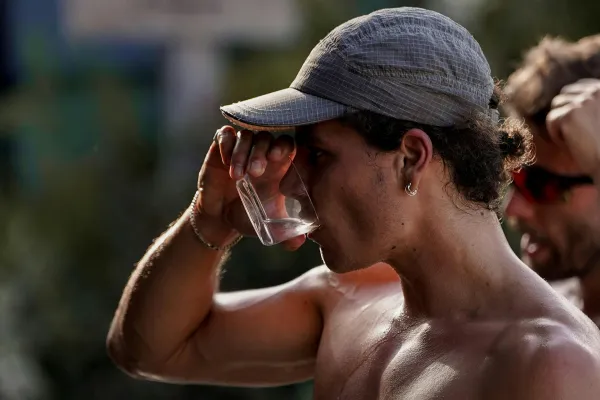
How Much Water Do You ACTUALLY Need for Optimal Performance?
Someone told you to drink eight glasses of water a day. Your friend chugs a gallon daily and swears it changed his life. Your trainer says "just drink when you're thirsty." An article claimed you need half your bodyweight in ounces. Another said that's too much.
You have no idea how much water you actually need. So you guess. Some days you drink a lot. Other days you barely drink anything. Your hydration is inconsistent, which means your performance is inconsistent, which means your progress is inconsistent.
Meanwhile, you're wondering: Is there actually a specific amount I should be drinking? Does my bodyweight matter? What about training intensity? Climate? Diet? And how do I know if I'm drinking enough versus too much?
Here's what most generic hydration advice gets wrong: there's no universal amount that works for everyone. A 150-pound woman training in air conditioning needs vastly different hydration than a 250-pound man doing two-a-days in summer heat. Your activity level, body size, sweat rate, climate, and even your diet all dramatically affect your individual water requirements.
The "8 glasses a day" advice? That's for sedentary people in moderate climates doing zero exercise. It's a baseline minimum, not an optimal target for athletes. Following that guideline while training hard guarantees chronic dehydration and suboptimal performance.
Let's calculate your actual individual needs, understand the variables that affect them, learn to monitor your hydration status accurately, and create a personalized hydration plan that supports your training and performance.
Why Generic Advice Fails
Understanding individual variation.
The 8 Glasses Myth
Where it came from:
1945 Food and Nutrition Board recommendation
2.5 liters (about 84 oz) total fluid daily
Includes fluid from ALL sources (food, beverages, water)
Meant for average sedentary adult
Somehow morphed into "8 glasses of pure water"
Why it's inadequate for athletes:
Doesn't account for bodyweight
Doesn't account for activity level
Doesn't account for sweat loss
Doesn't account for climate
Far too low for anyone training seriously
A 200-pound lifter training hard needs 2-3x this amount.
The "Half Your Bodyweight in Ounces" Rule
The formula:
Body weight (lbs) ÷ 2 = ounces of water daily
200 lbs → 100 oz daily
Better than 8 glasses, but still generic:
Doesn't account for activity
Sedentary 200 lb person ≠ training 200 lb person
Needs adjustment for athletes
Useful as baseline starting point, not final answer.
The "Gallon a Day" Approach
The blanket recommendation:
Everyone should drink 1 gallon (128 oz) daily
Popular in bodybuilding circles
Problems:
Too much for smaller/lighter people
Too little for larger people training hard
Doesn't account for individual variation
Can lead to overhydration in some cases
But: At least errs on side of more rather than less.
Calculating Your Baseline Needs
Your personalized starting point.
The Bodyweight Formula (Adjusted for Activity)
Sedentary (little to no exercise):
0.5 oz per pound of bodyweight
150 lbs → 75 oz (just under half gallon)
200 lbs → 100 oz (0.78 gallons)
250 lbs → 125 oz (just under 1 gallon)
Moderately Active (exercise 3-4x weekly):
0.6-0.7 oz per pound of bodyweight
150 lbs → 90-105 oz
200 lbs → 120-140 oz
250 lbs → 150-175 oz
Very Active (intense training 5+ days weekly):
0.75-1 oz per pound of bodyweight
150 lbs → 112-150 oz (0.9-1.2 gallons)
200 lbs → 150-200 oz (1.2-1.6 gallons)
250 lbs → 187-250 oz (1.5-2 gallons)
Start here, then adjust based on additional factors below.
Additional Variables That Increase Needs
Climate and environment:
Hot weather: +20-40%
High humidity: +20-30%
High altitude: +15-25%
Air conditioning (dry air): +10-15%
Diet composition:
High protein (200g+): +15-20%
Low carb/keto: +20-30%
High sodium: +10-15%
High fiber: +10-15%
Supplementation:
Creatine: +20-30%
Pre-workout caffeine: +10%
Diuretics (medications): variable, consult doctor
Training specifics:
Strength training: moderate increase (included in activity level)
High-volume bodybuilding: +20-30%
Endurance training: +40-60%
Two-a-day training: +30-50%
The Comprehensive Formula
Step 1: Calculate baseline
Bodyweight × activity multiplier (0.5-1 oz)
Step 2: Add climate adjustment
If hot/humid: multiply by 1.2-1.4
Step 3: Add diet adjustment
If high protein + creatine: multiply by 1.2-1.3
Step 4: Add training adjustment
If two-a-days or extreme volume: multiply by 1.2-1.3
Example: 200-lb bodybuilder, high protein + creatine, training hard in summer:
Baseline: 200 × 0.8 = 160 oz
Climate (summer): 160 × 1.3 = 208 oz
Diet (high protein + creatine): 208 × 1.2 = 250 oz
Total: About 2 gallons daily
This is dramatically more than "8 glasses."
Training Day Hydration Needs
Beyond just daily baseline.
Pre-Workout Loading
2-3 hours before training:
16-24 oz water
Allows absorption and bathroom break
Ensures starting fully hydrated
Why this timing:
Drinking right before = sloshing stomach
Too far before = already dehydrating again
2-3 hours = sweet spot
Add electrolytes if:
Training exceeds 90 minutes
Very hot conditions
Heavy sweater
Second session of day
Intra-Workout Requirements
During training:
Base rate: 8 oz every 15-20 minutes
60-minute session: 24-32 oz minimum
90-minute session: 36-48 oz minimum
Adjust for sweat rate and conditions
Factors increasing needs:
Heavy sweating: up to 12 oz per 15 minutes
Hot gym: +25-50%
Intense training: upper end of range
Longer sessions: consistent sipping critical
This is where Grip Hydra shines:
Visible reminder between sets
Convenient to sip consistently
Track intake by refills
The muscle arm motivates consistent hydration
Post-Workout Replacement
The replacement formula:
Weigh before and after training (if possible)
Every pound lost = 16-24 oz needed
Drink 150% of loss over next 2-4 hours
Why 150% and not 100%:
Continue losing water through breathing and sweating
Kidneys continue producing urine
Need to replace loss plus ongoing losses
Example:
Lost 3 pounds during training
Need 48-72 oz over next 2-4 hours
Don't chug it all immediately
Spread intake for better absorption
If you can't weigh:
Minimum 24-32 oz post-workout
More if very sweaty or long session
Continue baseline hydration rest of day
Monitoring Your Hydration Status
How to know if you're drinking enough.
Urine Color Test (Most Practical)
The scale:
Clear: possibly overhydrated (or just recently drank a lot)
Pale yellow/straw: optimal, well-hydrated
Yellow: adequate but could be better
Dark yellow: dehydrated, drink more immediately
Amber/orange: significantly dehydrated
Brown: severe dehydration or medical issue
When to check:
Every bathroom trip
First morning (should be darker, normal)
Post-workout (should be darker)
Throughout day (aim for pale yellow)
The goal: Consistently pale yellow, except first AM.
Urine Frequency
Optimal:
6-8 bathroom trips daily
Every 2-4 hours when awake
Clear to pale yellow each time
Too infrequent (<4 times daily):
Probably dehydrated
Drink more
Too frequent (10+ times daily):
Possibly overhydrated
May be drinking too much too fast
Spread intake more evenly
Body Weight Tracking
Morning weight patterns:
Stable weight day-to-day: likely well-hydrated
Fluctuations of 2-3 lbs daily: probably hydration variations
Consistent weight drop: likely chronic dehydration
Consistent weight gain: check if water retention or actual gain
Not perfect indicator but useful data point.
Performance and Feel
Subjective hydration indicators:
Well-hydrated feels like:
Good energy throughout day
Consistent training performance
Good pump during workouts
Mental clarity
Skin looks healthy
No headaches
Dehydrated feels like:
Afternoon energy crashes
Inconsistent workout performance
Poor pump
Brain fog
Dry mouth/lips
Headaches
Dark urine
Listen to your body in conjunction with objective measures.
Creating Your Personalized Hydration Schedule
Making consistent intake automatic.
The All-Day Strategy
Upon waking (6-7 AM):
16-24 oz immediately
Before coffee, before anything
Rehydrate from overnight fast
Morning routine (7-9 AM):
8-16 oz with breakfast
Sip with coffee (coffee ≠ hydration)
Continue sipping mid-morning
Pre-lunch (11 AM-noon):
8-16 oz before or with lunch
Helps with satiety too
Afternoon (1-4 PM):
16-32 oz spread across afternoon
Combat afternoon energy dip
Prevent evening dehydration
Pre-workout (5-6 PM if evening training):
16-24 oz (2-3 hours before)
Ensures starting hydrated
During workout:
24-48 oz depending on duration
Consistent sipping throughout
Post-workout:
24-48 oz over next 2-4 hours
Replace sweat loss
Evening (7-10 PM):
8-16 oz
Not too much to avoid night bathroom trips
Finish hydration before bed by 60-90 minutes
Total for 200-lb active person: 150-200 oz spread across day.
The Grip Hydra Tracking System
Making it visual and accountable:
Standard water bottle approach:
Grip Hydra holds ~32 oz (approximate)
200 oz goal = ~6 refills daily
Track refills to hit target
Time-based tracking:
Mark bottle with time goals
8 AM, 10 AM, noon, 2 PM, etc.
Visual accountability
Ensures spreading intake
The muscle arm reminder:
Every time you see Grip Hydra, drink
Carry it everywhere
Desk, car, gym, home
Visual cue triggers habit
Meal Anchoring
Using existing habits:
16 oz with every meal (3 meals = 48 oz)
8 oz between each meal (2-3 times = 16-24 oz)
16 oz waking + 16 oz bedtime = 32 oz
Total from meal anchoring: ~100 oz
Add training hydration on top
This creates automatic baseline without thinking.
Common Hydration Mistakes
What prevents optimal intake.
Mistake 1: Chugging Huge Amounts Infrequently
The problem:
Drink 40 oz all at once
Body can only absorb ~1 liter per hour
Excess goes straight to bladder
Then don't drink for 4 hours
The fix:
Spread intake evenly throughout day
Sip consistently
8-16 oz every 1-2 hours
Better absorption, better hydration
Mistake 2: Waiting Until Thirsty
The problem:
Thirst lags 1-2% dehydration
Already impaired by time you feel it
Reactive instead of proactive
The fix:
Scheduled hydration
Drink before thirsty
Use visual reminders (Grip Hydra)
Habit-based, not feeling-based
Mistake 3: Only Drinking During Training
The problem:
Arrive dehydrated
Drink during workout
Stop after
23 hours dehydrated, 1 hour hydrated
The fix:
All-day hydration strategy
Training is addition, not total
Baseline + training needs
Mistake 4: Overreliance on Urine Color Alone
The problem:
Urine can be clear immediately after drinking a lot
Doesn't mean tissues are hydrated
Or dark first thing AM (normal)
Doesn't mean chronically dehydrated
The fix:
Use urine color as one indicator
Combine with frequency, performance, feel
Track patterns over days, not single checks
Mistake 5: Same Intake Year-Round
The problem:
Drink same amount in winter AC as summer heat
Needs vary with environment
Static approach to dynamic needs
The fix:
Adjust for climate seasonally
Monitor urine color and adjust
Increase during hot months
Can reduce slightly in winter (if not training in heat)
Special Considerations
Unique situations requiring adjustment.
Cutting Weight (Fat Loss)
Hydration during caloric deficit:
Don't reduce water to "lose water weight"
Maintain or increase hydration
Helps with hunger management
Supports metabolic function
Aids fat oxidation
Water weight fluctuations are normal and temporary.
Creatine Loading Phase
Extra water needs:
Creatine pulls water into muscles
Need 25-40% more water during loading
20-25g creatine daily (loading) + 200 lb person = 250+ oz
After loading (5g daily): 20-30% increase
Low-Carb/Keto Diets
Dramatically increased needs:
Flushing glycogen = flushing water
Need to intentionally replace
Electrolytes especially critical
30-50% more water than normal
Don't confuse initial water weight loss with actual fat loss.
High Altitude Training
Altitude effects:
Increased respiratory water loss
Greater sweat evaporation (dry air)
Increased urine production
Need 15-25% more than sea level
Illness or Medication
Adjust accordingly:
Fever: dramatically increased needs
Vomiting/diarrhea: aggressive rehydration + electrolytes
Diuretic medications: consult doctor, likely need more
Some medications affect hydration status
The Overhydration Risk
Yes, you can drink too much.
Hyponatremia (Water Intoxication)
What it is:
Drinking excessive water without adequate sodium
Dilutes blood sodium dangerously
More common than people think
Symptoms:
Nausea and vomiting
Headache
Confusion
Seizures (severe cases)
Can be fatal
Who's at risk:
Endurance athletes (marathons, ultra runs)
People drinking 1+ gallons water quickly without electrolytes
Low-sodium diets + excessive water
Certain medications
Prevention:
Don't force excessive water (2+ gallons) without electrolytes
Match water to actual needs, not arbitrary high targets
Include sodium in diet
Pay attention to body signals
If urine is consistently clear and you're urinating constantly, you're probably drinking too much.
The Bottom Line: Personalized Hydration
There's no magic number that works for everyone. Your optimal hydration is:
Bodyweight × activity multiplier × climate adjustment × diet adjustment.
For most active people training seriously:
Baseline: 100-200 oz daily (0.8-1.6 gallons)
Training days: add 24-48 oz
Hot conditions: add 20-40%
High protein + creatine: add 20-30%
Monitor:
Urine color (pale yellow goal)
Performance consistency
How you feel
Body weight patterns
Adjust:
Based on monitoring
Seasonally for climate
For training volume changes
For diet changes
Make it automatic:
Track with Grip Hydra refills
Anchor to meals and routines
Spread intake evenly
Prioritize consistency over perfection
Your Hydration Action Plan
Starting today:
Calculate your baseline needs using bodyweight × activity level
Add relevant multipliers (climate, diet, training)
Set specific daily target in ounces
Determine Grip Hydra refills needed to hit target
Create hydration schedule throughout day
Track for one week and assess
Adjust based on urine color, performance, feel
Within 1-2 weeks of hitting your personalized target:
Consistent energy levels
Better training performance
Improved recovery
Mental clarity
Stable body weight
Pale yellow urine consistently
Stop guessing. Start calculating. Stay hydrated with Grip Hydra.
[Calculate Your Needs, Track Your Intake, Hit Your Goals with Grip Hydra →]

